Akasegawa Genpei was a pseudonym of Japanese artist Akasegawa Katsuhiko (赤瀬川克彦), born March 27, 1937 in Yokohama. He used another pseudonym, Otsuji Katsuhiko (尾辻克彦), for literary works. A member of the influential artist groups Neo-Dada Organizers and Hi-Red Center, Akasegawa went on to maintain a multi-disciplinary practice throughout his career as an individual artist. In 1986, Akasegawa and his collaborators, Terunobu Fujimori and Shinbo Minami, to announce the formation of a new group: Street Observation Society; In 1994, the Leica Alliance with contemporary artist Akiyama Yūtokutaishi and photographer Takanashi Yutaka; and in 1996, the Japan Art Support Group with art researcher Yamashita Yuji. He has had retrospective exhibitions at the Hiroshima City Museum of Contemporary Art, Chiba City Museum, and Oita City Museum. His work is in the permanent collection at Museum of Modern Art in New York. Artist Nam June Paik has described Akasegawa as “one of those unexportable geniuses of Japan.” He pass away on October 26, 2014, at the age of 77.
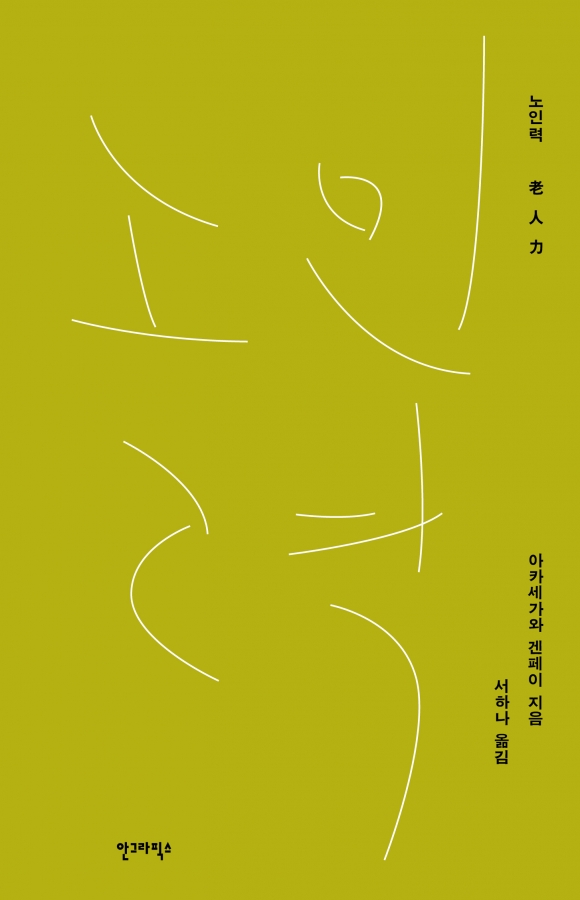
Authors
Akasegawa Genpei
赤瀬川原平
다른 사람들
-
He is on the executive team of the Parsons Institute for Information Mapping(PIIM) New School. He currently teaches at Parsons School of Design. He has worked at Rudolf de Harak & Associates, Peter Schmidt Studio(Hamburg, Germany), and the world-renowned Pushpin Group, and taught design and typography at Cooper Union for 15 years. He has also been a visiting lecturer at Columbia University and the State University of New York at Purchase.
-
Park Chang-hyun
Based in Seoul, this architect designs architecture, spaces, and furniture. In 2013, they founded AROUND Architects, focusing on the social perspective of architecture. Their work spatially proposes connections between people in shared spaces and between buildings to foster neighborhood connectivity. Recent completed projects include the Third Place series of multi-family housing and the Jeongbalsan House. From 2002 to 2018, they taught architecture at Kyonggi University and Korea University. … -
Park Hyun-taek
Majored in visual design at Hongik University and lectured at several universities before coming across the National Museum of Korea, where work has continued for over twenty years. While working in the fields of ‘museums,’ ‘design,’ and ‘culture,’ doubts arose about the fact that design was being absorbed only in external decoration. Reevaluating design led to confronting the question of ‘why and for whom to design,’ rather than ‘how to design.’ This process led to the realization that design … -
Kim Tae-il
Professor at Jeju National University, School of Architecture. He graduated from Dong-A University and earned his master’s and doctoral degrees from Kyoto University in Japan. He worked as a researcher at the Longevity Social Organization in Hyogo Prefecture, Japan, and as a manager of the Silver Division at Kyungnam Corporation. His specialty is senior facility planning, and his research focuses on community-based senior living environments. As a researcher on Jeju Island, he is … -
Lee Jung-kuk
Lee Jung-kuk graduated from Yonsei University’s Graduate School of Education, and attended the Emerson College Waldorf Teacher Training Program and the Visual Arts Program in the UK. -
Kim Yong-chul
Born in 1949, he graduated from the Department of Western Painting at Hongik University’s College of Fine Arts and completed his graduate studies in the Painting Department at the same university. He is currently a professor in the Painting Department at Hongik University’s College of Fine Arts. His works are in the collections of 17 institutions including the National Museum of Modern and Contemporary Art, Seoul Museum of Art, and Hongik University Museum. His publications include … -
Kim Eun-young
She started her career as a book designer at a design-focused publishing house and now works as a planner building on her foundation in design. As she strived to truly understand her work, she ended up writing her third book and became someone who shares knowledge in front of others. Although she has experienced design and publishing as professional fields, she places more emphasis on design and bookmaking as part of everyday life and general education. Since August 2012, she has been teaching … -
Jennifer Tobias
Jennifer Tobias is a scholar andillustrator. She holds a PhD in Art History from the City University of NewYork, an MLS from Rutgers, and a BFA from Cooper Union. She provided reader services at the Museum of Modern Art and Parsons School of Design libraries. Her illustrations are included in Health Design Thinking and Design is Storytelling, both by Ellen Lupton. She and Lupton are looking forward publication of Extra Bold: A Feminist, Inclusive, Subversive, Non-Binary Field Guide for Graphic … -
도니스 A. 돈디스
시각 문해력 분야의 선구자이자 시각 커뮤니케이션 교육자로 활동한 디자이너. 시각 커뮤니케이션의 기본 원리를 하나의 언어처럼 배우고 이해해야 한다고 주장하며 시각 문해력을 정립했고 이를 가르치는 교육 과정을 설계하고 확산시켰다. 시카고대학교를 졸업한 후 보스턴대학교 커뮤니케이션아트학부에서 조교수 및 기획자로 활동했다. 디자인과 디자인 교육에 공헌한 인물로 매사추세츠예술디자인대학은 그의 이름을 딴 ‘도니스 A. 돈디스 트래블 펠로우십Donis A. Dondis Travel Fellowship’을 제정해 학생들의 해외 연구, 창작을 지원하고 있다. -
Han Baek-jin
Graduated from the Graduate School of Industrial Arts at Hongik University and has been actively involved as a member of the Korean Society of Brand Design, the Korean Society of Basic Visual Design, and VIDAK, as well as an invited designer at the Korea Industrial Design Exhibition. In 2005, served as a visiting professor at the University of Washington (UW) and is currently a professor in the Department of Visual Design at Dankook University’s College of Arts. Authored Brand Package … -
정시화
국민대학교 조형대학 시각디자인학과 명예교수. 1976년부터 30여 년간 그래픽 디자인 창작실기, 디자인론, 색채계획, 전통색채론 등을 가르치며 교육자로서 활발히 활동했다. 대한민국산업디자인전에 추천작가·초대작가로 선정됐으며, 심사위원을 역임했다. 한국시각디자인협회 국제부회장을 지냈으며, 88서울올림픽위원회 중 디자인전문위원회의 주요 일원으로 활동했다. 국립현대미술관 「한국전통표준색명 및 색상: 제1차 시안」에 연구위원으로 참여했고, 서울시립미술관 개관전 〈한민족의 빛과 색〉에는 자문위원으로 참여했다. 국제디자인협의회(ICoD, 전 세계그래픽디자인협의회), 국제색채심포지엄, 바우하우스 답사 연구 등 다양한 국제 활동을 통해 세계 그래픽 디자인의 동향을 한국 디자인계에 반영하는 데 일조했다. 지은 책으로 『현대 디자인 연구』 『한국의 현대 디자인』 『산업 디자인 150년』이 있으며, 옮긴 책으로 『디자인론』 『포스터 디자인사』가 있다. 대표 논문으로는 「덴마크 디자인의 에센스」 … -
IDR
IDR is a combination of letters reminiscent of ordinary English words such as idea and ideal. It is intended to be a more free architecture that responds flexibly to various external conditions without being bound by a specific logic or theory. Questioning what is taken for granted in our cities and architecture is the starting point of his work, and he is particularly interested in the role of architecture as a mediating background between users and everyday life.