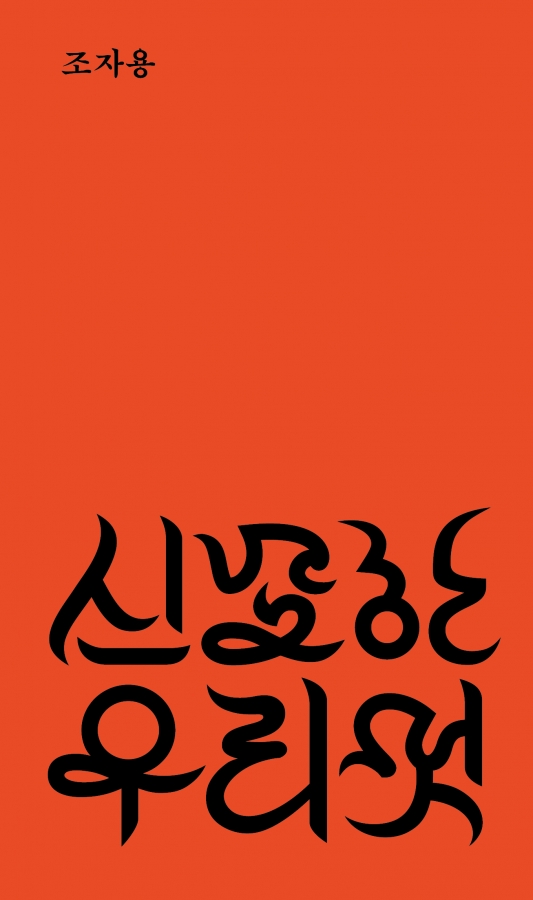
Born in Hwangju, Hwanghae-do, he graduated from Pyongyang Teachers’ College (平壤師範學校) at the age of 18 and briefly worked as an elementary school teacher. After the liberation of Korea, he moved south, worked as a houseboy for the U.S. military, and at 22, went to study in the United States. He graduated from Wesleyan College and Vanderbilt University and earned a master’s degree in Structural Engineering from Harvard University. Returning to Korea in 1954, he pursued a career in architecture while collecting dokkaebi tiles and minhwa (Korean folk paintings). As an architect, he designed notable buildings such as the main buildings of Kyungpook National University in Daegu, Keimyung University, Dongsan Hospital, and the Sejong University Museum. His Habib House, built in the style of a traditional Korean hanok, is the only U.S. ambassador’s residence worldwide constructed in the host country’s architectural style, and it is highly regarded for its beauty. His published works include The Beauty of Korean Folk Painting, The Art of Calligraphy and Painting, and The Arts of Korea and Japan. He also authored English works such as Humour of the Korean Tiger and Spirit of the Korean Tiger, as well as Japanese titles like The Beauty of the Joseon Dynasty and The Heart of Joseon Folk Paintings.
Authors
Zo Za-yong
조자용
다른 사람들
-
Graduated from the Department of Painting at Seoul National University’s College of Fine Arts and completed a master’s degree at the same institution. Earned a Master of Fine Arts in Computer Art from New York University (NYU) and a Ph.D. in Media Art from Soongsil University. Currently serves as a professor in the Department of Industrial Design at Hanyang Women’s University.
-
Jan Tschichold
Jan Tschichold also known as Iwan Tschichold or Ivan Tschichold, was a German calligrapher, typographer and book designer. He played a significant role in the development of graphic design in the 20th century – first, by developing and promoting principles of typographic modernism, and subsequently idealizing conservative typographic structures. His direction of the visual identity of Penguin Books in the decade following World War II served as a model for the burgeoning design practice of … -
Frank Wagner
A designer and freelance curator, founder of the international design agency “hw.d”, which he led for 20 years. Over the course of his career, he has worked with various institutions, companies, brands, and designers on-site, while also publishing a magazine focused on new design cultures. He has curated exhibitions at the Museum Ludwig in Cologne and the Cobra Museum in Amsterdam. Currently, he resides in Munich, Germany. -
Cho Young-jae
A graphic designer and Professor Emeritus at Seoul National University, he is the Honorary President of the Korean Federation of Design Organizations. Throughout his illustrious career, he has held numerous influential positions in the field of design: Jury Member for the Asia Digital Art and Design Awards (2001–2007), Honorary Doctorate in Design from Dongseo University (2001), International Jury Member for Hong Kong Design Show 98 (1998), Founding President of the Korea Society of Visual … -
Hansil
Awakened to the disarray in the Korean language, he dedicated himself to reviving dying words, simplifying difficult Sino-Korean terms into accessible native expressions, and interpreting Korean words in Korean. He established “Maum-Dakkeuneun Maeul” (Mind-Polishing Village) at the foot of Surime (Mount Songni) in the Sabara region (Sangju) of Nosarasa (Gyeongbuk). There, he leads meditation practices to help anyone polish their mind, freeing themselves from suffering to live a … -
Doi Akifumi
Born in Hiroshima in 1957. Owner of Tom’s Box. Handles picture books and books related to picture books. He has been involved in the planning and editing of over 300 picture books to date, including the Forest of Images series (Holp Shuppan) and Neko no Sweater (Oikawa Kenji, Takeuchi Mayuko). He also organizes the workshop Atosaki Juku with Akira Ono, which aims to nurture picture book authors. -
Choi Ho-chun
Completed doctoral coursework in Visual Design at the College of Fine Arts and the Graduate School of Hongik University. Recipient of awards such as the Korea Institute of Design Promotion (KIDP) President’s Award and the Prime Minister’s Award at the Korea Industrial Design Exhibition. Served as an inaugural designer for KIDP and as the Chair of the Visual Designers Division at the Korean Association of Industrial Artists. Authored books including Visual Communication Design and High School … -
Ku Mo-a
After graduating from Konkuk University, she worked at Sandol Communication, a Korean type foundry, for five years, and as a researcher and team leader at AG Typography Research Center, she worked on several typeface projects, including “Sandoll LateSpring,” the Maru project “Maru Buri,” and the 87MM brand’s exclusive font “87MM ILSANG.” She has been conducting research and projects on screens and fonts since “AG Choijeongho Screen” and has been working on typeface design based on … -
Rhi Joo-myung
Rhi Joo-myung studied industrial design at Seoul National University and design management at Leicester Polytechnic in the UK. He joined LG Electronics when it was called Geumsung and gained practical experience in planning and product design for over 9 years. He taught product design, design methods, and design management at Inje University and now at Yonsei University Wonju Campus. He has long been interested in the qualitative nature of design and hopes to better understand the … -
Roel Klaassen
Roel Klaassen is Programme Manager at Premsela, Dutch Platform for Design and Fashion. Roel is a design enthusiast with an academic background in design, psychology and strategic management. At present he’s working on the People’s Republic of Design programme, a Premsela initiative that aims to stimulate the development of an open design culture. -
문지숙
이화여자대학교에서 교육공학을 전공하고 홍익대학교에서 「타이포그라피에 있어서 시각적 유희에 관한 연구」로 석사학위를 받았다. 안그라픽스를 거치며 보고서|보고서 재창간 작업에 참여했으며, 현재 디자인과 건축 분야 책 만들기에 집중하고 있다. -
Helmut Schmid
Typographer. Born in February 1942 in Austria with German nationality, he completed an apprenticeship as a typesetter in Germany before studying at the Basel School of Design (Schule für Gestaltung Basel) under Emil Ruder, Kurt Hauert, and Robert Büchler. He subsequently worked in Germany, Sweden, Denmark, Canada, and Japan, where he created his renowned type design “Katanaka Eru”. In Japan and Germany, he published several books, including Gestaltung ist Haltung (Design Is …