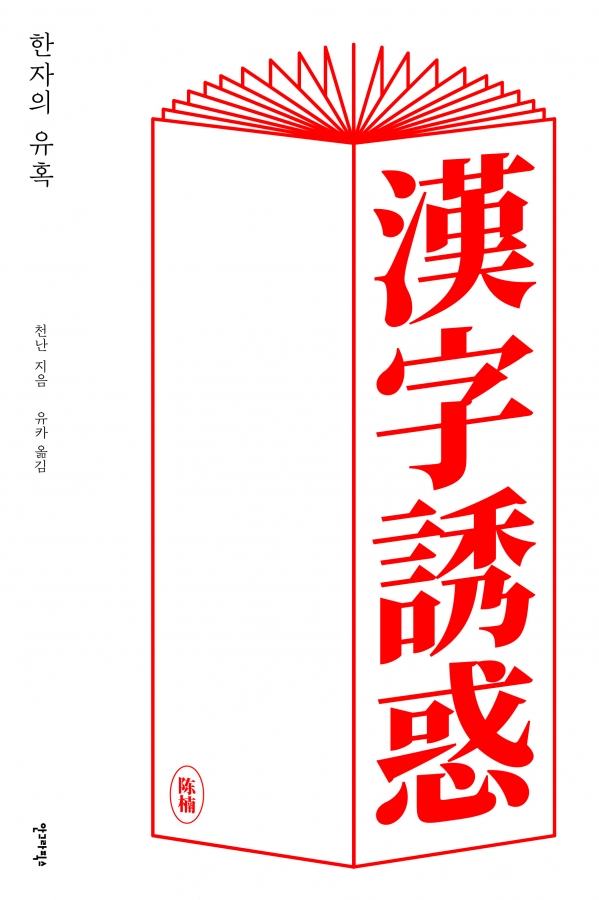
A professor and doctoral advisor at the Academy of Arts & Design, Tsinghua University, as well as the Executive Deputy Director of the Chinese Ancient Characters Art Research Center. He serves as Deputy Chair of the Visual Communication Design Department and holds a Ph.D. in Design. He is a member of the China Artists Association, a director of the Beijing Industrial Design Promotion Association, and notably participated as a torchbearer in the Beijing Olympics relay. He chaired the Visual Communication Design category for The Beauty of Chinese Characters’ Global Youth Design Contest and delivered a lecture on Chinese character design at UNESCO headquarters in Paris. He designed the first oracle bone script font and cursive script font, pioneering research-based design education and proposing the Rhythmic Structure (律格) design theory. In 2017, he organized the exhibition Recreate Oracle: Ancient Characters in the Context of Modern Design in Beijing and, in 2018, launched his first national touring exhibition, Chinese Characters & Rhythmic Structure: Chen Nan’s Perspective on Chinese Character Art & Design, at the Hubei Museum of Art.
Authors
Chen Nan
陳楠
다른 사람들
-
Director of the Play AT Institute. He teaches young people at the Kurikindi center. He is the author of “An Earthbag House with Neighbors , The Return of the Fire Pit , The Age of the Woodstove , and “My Hands Are Tired .
-
Lee Yu-jin
Lee Yu-jin graduated from Ewha Womans University with a B.A. in Sociology and received her M.A. in Art History from Hongik University. She has been engaged in art education for the general public, exhibition planning, and publishing activities at museums. She is the author of Critic Lee Il and the AG Group in the 1970s , Critic Lee Il Anthology and The Birth of a Hero among other books. -
Kuma Kengo
Born in Yokohama in 1954, he studied architecture at the University of Tokyo and was a visiting scholar at Columbia University’s Department of Architecture and Urban Planning in the United States. He is currently a principal of Kengo Kuma and Associates and a special professor and professor emeritus at the University of Tokyo. His major works include Kiro-San observatory (1994), Water/Glass, Atami, Noh Stage in the Forest /Moributai Traditional Performing Arts Museum, Bato Hiroshige … -
Park Kum-jun
He is a graphic designer, the CEO of 601bisang, and a member of the Alliance Graphique Internationale (AGI). He graduated from the Department of Visual Communication Design at the College of Fine Arts, Hongik University, in 1988 and from the Graduate School of Advertising and Public Relations at Hongik University in 1999. From 2002 to 2005, he served as an adjunct professor in the Department of Visual Communication Design at Hongik University’s College of Fine Arts. Previously, he worked as an … -
Kil Hyung-jin
He is passionate about design and making complex concepts more accessible. He is currently working on design systems at Wanted Lab to improve the speed and quality of digital product creation. -
Armin Hofmann
Armin Hofmann was a Swiss graphic designer. He was one of the most prominent individuals in Swiss design. He began his career in 1947 as a teacher at the Allgemeine Gewerbeschule Basel School of Art and Crafts at the age of twenty-six. Hofmann followed Emil Ruder as head of the graphic design department at the Schule für Gestaltung Basel (Basel School of Design) and was instrumental in developing the graphic design style known as the Swiss Style. His teaching methods were unorthodox and broad … -
Tsuzuki Kyoichi
Kyoichi Tsuzuki was born in Tokyo in 1956. From 1976 to 1986, he was a freelance editor for the influential men’s fashion and lifestyle magazines Popeye and Brutus, where he wrote on contemporary art, design, urban living, and related topics. From 1989 to 1992, he published Art Random (Kyoto Shoin), a 102-volume series covering 1980s trends in global contemporary art. He continues to write and edit works on contemporary art, architecture, photography, design, and more. In 1993, he released the … -
Han Jin-yeong
Graduated from the Department of English Language and Literature at Chonnam National University and spent nearly a decade working in publishing, creating books. Later transitioned to a full-time career as a translator. Notable translations include How to Write a Life , Living a Life of Writing , Seeking Meaning Outside Religion , The Bonobo’s House , People Skills , The Boy Who Lost His Shoes , and Diagrams: The Art of Organizing Thoughts . -
Kimura Shunsuke
Interviewer and author. He began his career as an interviewer when he attended a seminar by Japanese intellectual Tachibana Takashi while a student at the University of Tokyo. After working in the office of copywriter Shigesato Itoi, he went out on his own. He has been a professional interviewer for 20 years and has interviewed and organized the stories of more than 1,000 people. -
Nam Jung-min
He graduated from Yonsei University with a bachelor’s degree in architecture and received his master’s degree in architectural design from Harvard University Graduate School of Design (GSD). He has interned and practiced at various offices including Kennedy & Violich Architecture (KVA), Office for Metropolitan Architecture (OMA), and Safdie Architects. He is currently a professor at Seoul National University of Science and Technology, where he founded the OA-Lab architectural … -
Stanley Morison
Stanley Arthur Morison was a British typographer, printing executive and historian of printing. Largely self-educated, he promoted higher standards in printing and an awareness of the best printing and typefaces of the past. From the 1920s Morison became an influential adviser to the British Monotype Corporation, advising them on type design. His strong aesthetic sense was a force within the company, which starting shortly before his joining became increasingly known for commissioning popular, … -
National Museum of Korea
The National Museum of Korea is the flagship museum of Korean history and art in South Korea. Since its establishment in 1945, the museum has been committed to various studies and research activities in the fields of archaeology, history, and art, continuously developing a variety of exhibitions and education programs. It was relocated to Yongsan District, Seoul in 2005. On June 24, 2021, the National Museum of Korea opened a new branch inside Incheon International Airport. The museum has …